
Water Pooling in the Yard After Every Storm? How Grading Redirects It
July 6, 2026

Water pools in the same low spots after every storm because the ground is not sloped to carry runoff away, so it collects and sits until it slowly soaks in or evaporates. Grading fixes the root cause by reshaping the surface to a steady fall, usually around a two percent slope away from the house and low points, and adding swales that channel water toward a safe outlet. It is a correction to how the land itself sheds water, not a patch on the symptom.
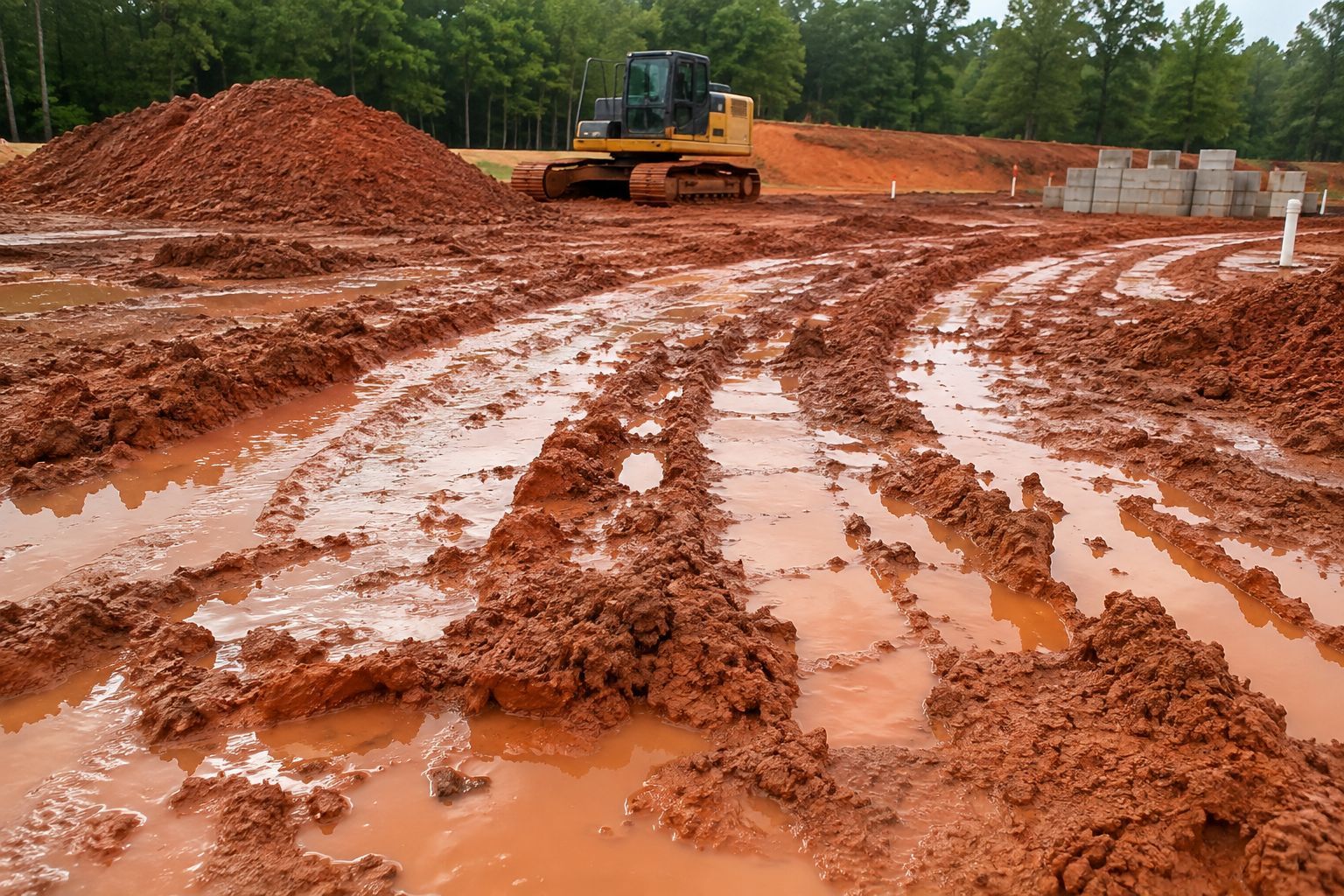
You walk out the morning after a hard rain and the same spots are underwater again. A shallow pond has set up in the middle of the yard, the low corner by the shed is soft enough to sink a boot, and there is a dark band of standing water tracing along the foundation where it never used to be. The sun comes out, most of it disappears by afternoon, and then the next storm rolls through and it all comes back exactly where it was before. Nothing you have thrown at it, sand, more grass seed, a bag of gravel in the wet spot, has made it stop.
Pooling water that returns to the same places after every storm is almost never a fluke. It is the ground telling you it has no clean path to move water off the surface, and the water is doing what water always does, which is find the lowest point and stay there. Reshaping how the land sheds water is exactly what grading is for. Here is what is actually happening under those puddles and how the surface gets rebuilt so the water leaves on its own.
Why the Water Keeps Coming Back to the Same Spots
The ground has no fall, so water has nowhere to go
Water only moves across a surface when that surface tilts. When a section of yard is flat or, worse, dished into a slight bowl, rain that lands there has no push in any direction. It spreads out, fills the low point, and waits. Grade the surface to a consistent fall and that same water starts moving the moment it lands, which is the whole difference between a yard that drains and one that ponds.
North Georgia sits on red clay, and clay does not let water sink in
The soil under most yards here is Georgia red clay, an Ultisol that is dense, fine grained, and rich in kaolinite. It has naturally low permeability, which is a technical way of saying water moves through it very slowly. When a hard rain hits a clay yard, the ground cannot absorb it fast enough, so the water sheets across the surface and runs wherever gravity sends it. On sandy or loamy ground a lot of rain soaks straight down and the pooling problem is smaller. On clay, almost all of it stays on top, so the shape of the surface is doing nearly all the drainage work, and any low spot shows up as a puddle.
Graded and filled lots pack the clay down even harder
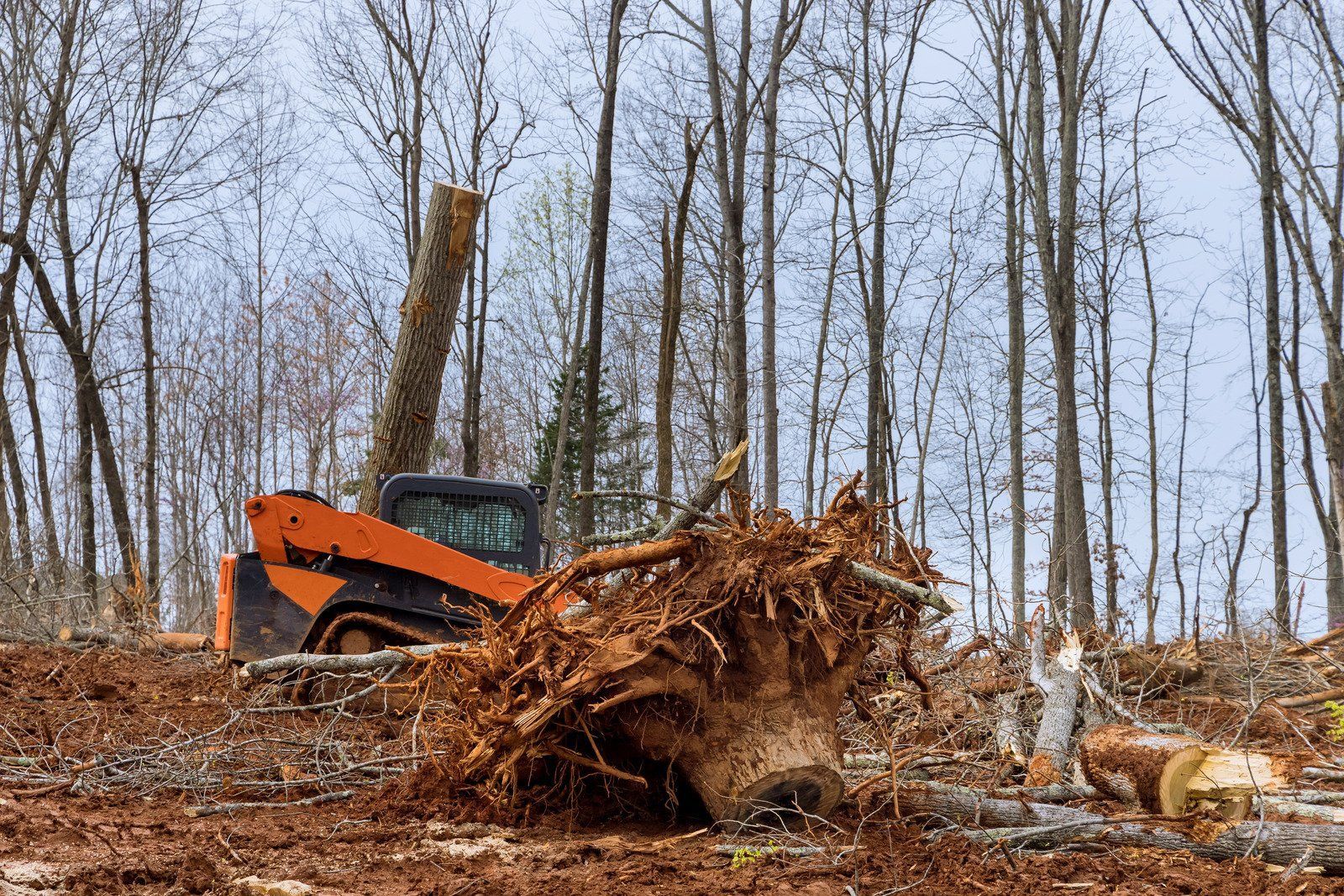
Many newer subdivisions and building sites across Hall, Forsyth, and the surrounding counties were developed on heavily graded and filled land. That construction process compacts red clay significantly, leaving it even denser and less permeable than the native, undisturbed soil next to it. Undisturbed forest soil in the Piedmont can absorb well over ten inches of rain before it saturates, but strip the trees and compact the clay and that number falls off a cliff. So a freshly built lot can actually drain worse than the woods it replaced, and the fix has to come from reshaping the surface rather than hoping the ground will start soaking it up.
Settling quietly reverses a grade that used to work
Even a yard that drained fine when the house was built can flatten or tip the wrong way over time. Backfill against the foundation settles, mulch and topsoil build up in beds, landscaping gets added against the wall, and a grade that once carried water away slowly loses its fall or even reverses. That is why a drainage problem can show up years after everything looked fine, with no obvious cause.
What Grading Actually Changes
Grading is the work of reshaping the ground surface so it drains on purpose instead of by accident. It is not moving a little dirt into the wet spot and calling it level. It is establishing a deliberate, continuous fall across the whole area so that every drop of rain has a downhill path from where it lands to where you want it to end up.
The target most site work aims for is a steady slope of roughly two percent away from the house and away from the low areas. Two percent works out to about six inches of drop over the first ten feet, and it is the figure the International Residential Code calls for on hard surfaces within ten feet of a foundation, which most of North Georgia builds to. That grade is gentle enough that you would not trip on it and would barely notice it walking across the yard, but it is steep enough to keep water moving instead of ponding. On permeable ground like lawn, the same idea holds, with builders often shooting for at least half an inch of fall per foot over that first ten feet so the surface never lets water sit against the structure.
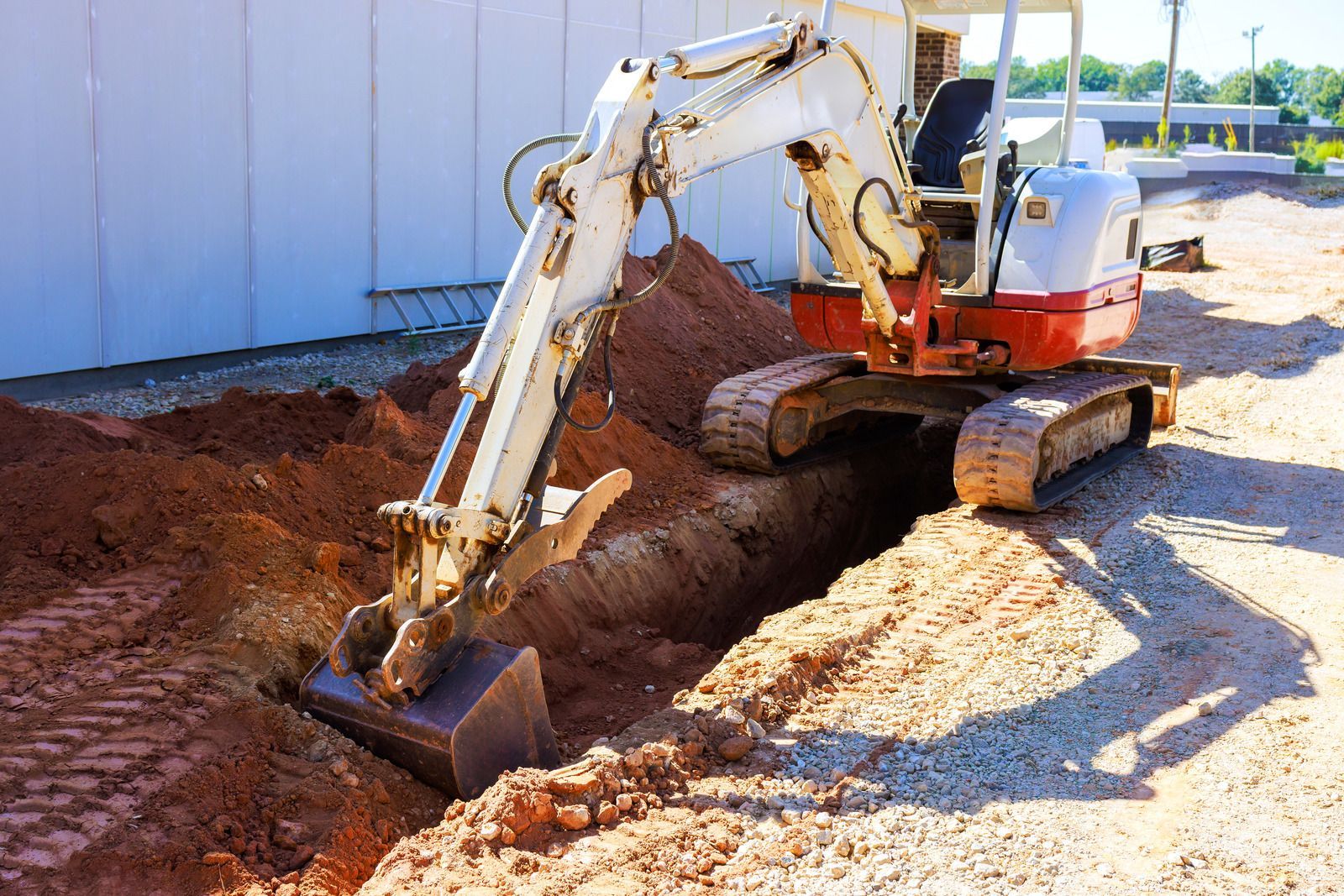
To get there, the crew reads the existing high and low points of the yard, strips and reworks the surface, brings in or redistributes soil, and shapes a continuous grade toward a safe outlet. The final surface gets capped and compacted so it holds that shape instead of settling back into a bowl the first wet season. The goal is a yard where you could pour a bucket of water anywhere and watch it head in the direction you chose.
Tip:
After the next hard rain, walk the whole perimeter of the house and the yard while it is still wet and note exactly where water stands and which way it is trying to run. Take a few phone photos of the puddles at their worst. That map of where water actually collects is the single most useful thing you can hand a grading crew, because it shows the real low points and flow paths far better than a dry yard ever will.
Grading Around the Foundation Specifically
The band of standing water along the base of the house is the one worth taking most seriously, because that is where pooling turns into structural trouble. When water collects against the foundation, it keeps the clay there saturated, and saturated red clay swells. That expanding soil presses sideways against foundation walls and, in the dry stretches that follow, pulls back and contracts, and that constant push and pull is directly tied to the foundation cracks and drainage headaches homes in this region see over time.
The fix is to make sure the first ten feet out from the house fall away from it steadily, at that same two percent target, so runoff is always leaving the structure rather than pooling against it. Grading that perimeter correctly, keeping soil and mulch from creeping up over the foundation, and directing downspout water well out past that ten foot zone all work together. It is common guidance to keep a few inches of foundation showing above the finished grade so water sheds off the dirt rather than riding up over it, and to extend downspouts several feet out so they are not dumping straight onto the clay at the wall.
None of that works if the grade itself is flat or tipped inward, which is why fixing foundation pooling almost always starts with reshaping the ground, not with the gutters alone. Get the fall right first, then the downspout extensions and the buffer around the wall have something to work with.
Frequently Asked Questions
Why does water pool in my yard after every storm even though it drains eventually?
Water pools because your yard lacks consistent slope, allowing rain to collect in low areas before slowly evaporating or soaking into dense clay. Proper grading creates a steady path that moves runoff away instead of letting it remain standing.
Will adding topsoil or sand to the wet spot fix the pooling?
Usually not. Filling low spots without correcting the surrounding grade simply creates another shallow basin where water collects. Long-term drainage improvement requires reshaping the entire area with consistent slopes directing runoff toward a safe discharge point instead.
What slope does a yard need to drain properly?
A typical drainage goal is about a two-percent slope, roughly six inches over ten feet. This provides enough fall for water movement while remaining comfortable for mowing and walking. Exact grading depends on each property's layout and drainage destination.
Is a swale the same as a ditch?
No. A swale is a wide, shallow channel that gently directs stormwater across the landscape while remaining mowable. A ditch is narrower and deeper. Swales reduce erosion, improve drainage, and safely carry runoff without creating steep, hazardous channels nearby.
Why is red clay such a problem for drainage?
Red clay drains slowly because its dense, tightly packed particles resist water infiltration. Most rainfall stays on the surface instead of soaking downward, making proper grading essential. Even minor depressions become standing water whenever storms deliver moderate or heavy rainfall.
Can grading make my foundation water problem worse if it is done wrong?
Yes. Improper grading can direct water toward the foundation instead of away, increasing soil saturation and structural movement. Poor drainage may also send runoff onto neighboring properties. Careful grading plans ensure water leaves the site safely and efficiently afterward.
Getting the Water Off Your Yard for Good
The puddles that come back to the same spots after every storm are not random and they are not going to fix themselves. They are a sign the ground has no fall and no path to shed water, and on North Georgia's tight red clay, where almost nothing soaks in, the shape of the surface is doing all the work. Grading solves it at the source by rebuilding that surface into a steady slope, adding swales where a simple tilt is not enough, and pointing the whole system at an outlet that can handle it. Done right, water leaves your yard on its own and stops pooling against the house and in the low corners, storm after storm.
Schedule a drainage grading assessment — If storm water keeps ponding in your yard and creeping toward the foundation, the ground needs a real slope built into it, not another bag of fill in the wet spot. With 5 years of experience, Georgia Land Pros evaluates the high and low points across properties in Gainesville, Georgia, reshapes the surface to create a steady slope away from the house, and installs swales that direct runoff to a safe outlet. The team then caps and compacts the grade for lasting performance. Reach out to get your yard walked and a grading plan mapped before the next round of storms puts water back in the same places.