Red Clay Turning to Soup Every Time It Rains? Why It Complicates Site Work
August 27, 2026
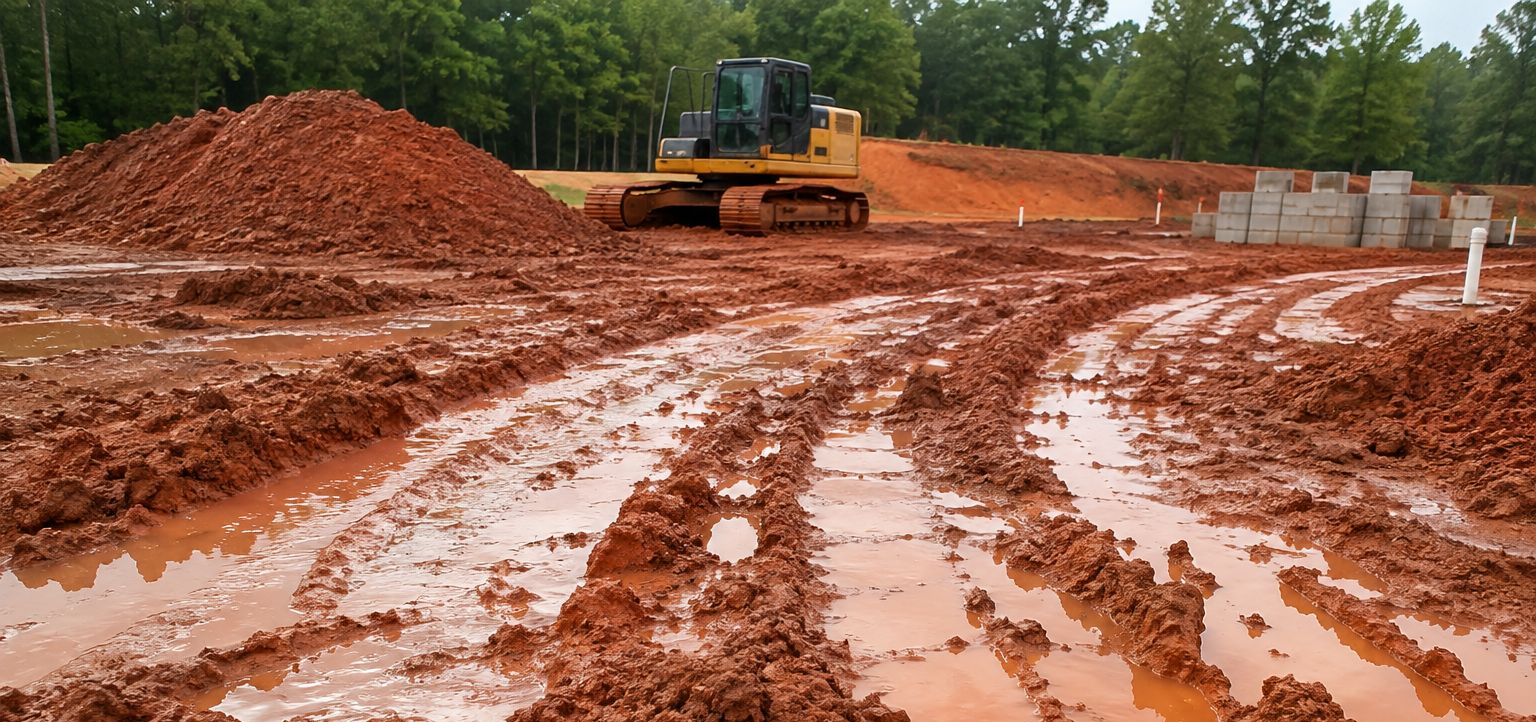
You watched the forecast, scheduled your equipment, and then the sky opened up. Now the lot you were counting on to hold a foundation, a driveway, or a septic field looks and feels like pudding. Boots sink to the ankle. Tire ruts fill with standing water in minutes. A surface that looked firm and dry a week ago has turned into something you would not trust to hold a garden shed, let alone a house pad.
If you own property anywhere from Gainesville to Dahlonega, Cumming to Commerce, you have almost certainly run into this. It is not bad luck and it is not a sign your land is unusable. It is red clay behaving exactly the way North Georgia clay behaves, and once you understand why, you can plan around it instead of fighting it every time a storm rolls through.
Quick Answer:
North Georgia's red clay is a fine-grained soil formed from weathered rock called saprolite, and it holds water instead of draining it away. When rain saturates that clay, the particles lose their grip on each other and the ground turns soft, sticky, and unstable, which is why site work crews grade, compact, and manage drainage before heavy equipment or a foundation ever touches the surface.
Why North Georgia Clay Behaves This Way
The Piedmont region, which covers most of Hall, Jackson, Barrow, Forsyth, White, and Banks counties, sits on a foundation of granite and other crystalline rock that has been weathering for millions of years. That slow breakdown produces a material called saprolite, a mix of silicon, aluminum, and iron oxides. The iron oxides are what give the soil its rust-red color, and the fine particle structure is what makes it behave so differently from sandier soils you might have dealt with elsewhere.
Clay particles are microscopic and flat, almost like tiny plates stacked on top of each other. When they are dry, those plates lock together and the ground can feel almost as hard as concrete. Add water, and the plates separate just enough to let moisture wedge between them. The soil swells, loses internal friction, and stops behaving like a solid. That is the "soup" you are standing in after a storm. It is not that the water is sitting on top of the clay. It is that the water has gotten inside the clay's structure and changed how the particles interact with each other.
This matters for site work because nearly everything a crew does on your property, from setting grade to running utility trenches to preparing a foundation pad, depends on the soil holding its shape under load. Clay that is behaving like soup will not compact properly, will not support heavy equipment without rutting, and will not hold a slope without slumping.
The Slope Problem Nobody Talks About Until It's Too Late
North Georgia is not flat. Between the rolling hills around Cleveland and the steeper terrain near Dahlonega, most lots have some grade to them, and that grade interacts with saturated clay in a way flat ground never will. On level clay, water at least has a chance to soak in slowly or evaporate. On sloped clay, saturated soil starts to move downhill under its own weight. That is the mechanism behind small slope failures, washed-out driveways, and the slow creep that eventually undermines a retaining wall or a section of yard.
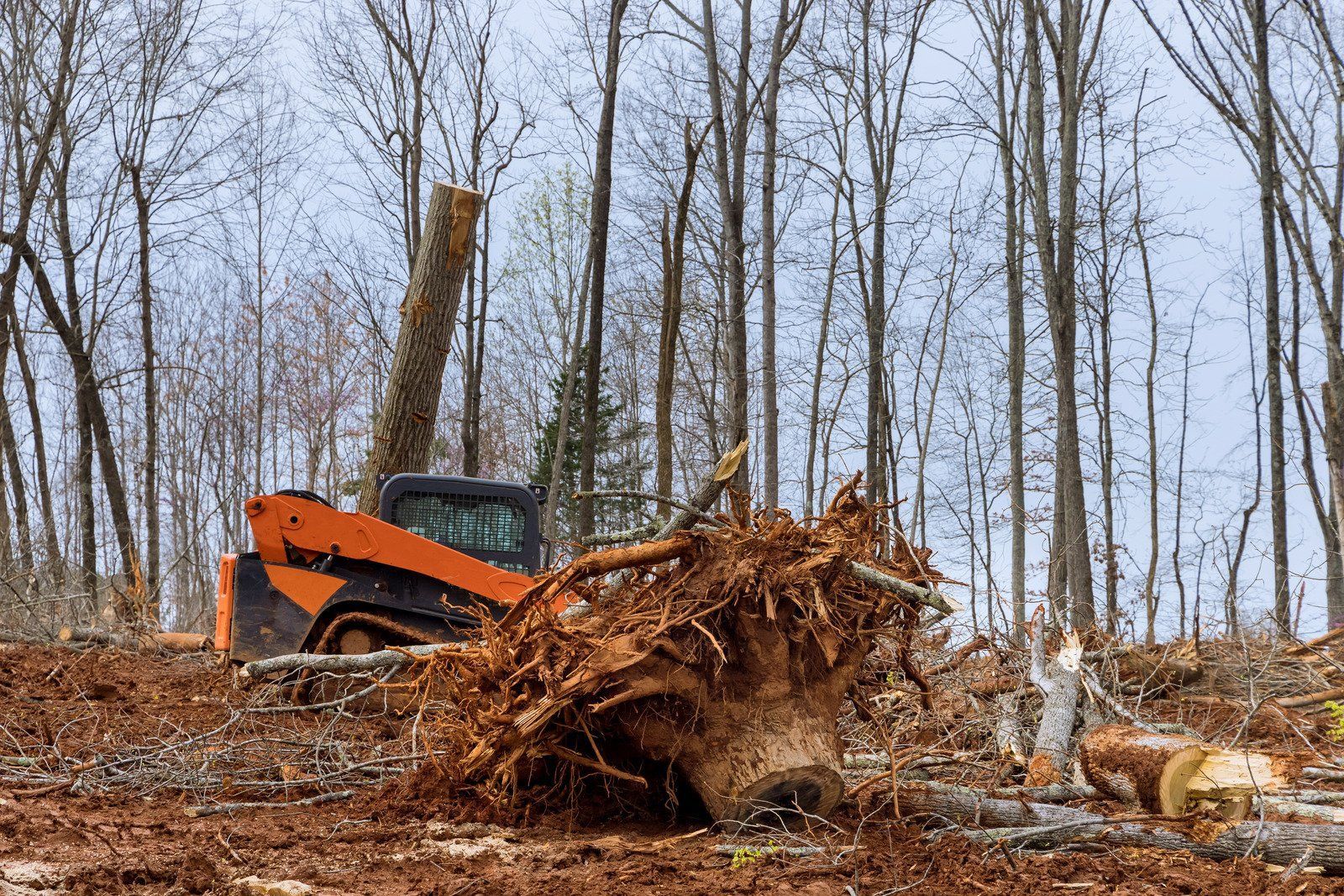
Vegetation matters here too. The Georgia Piedmont's clay-based soil erodes quickly once trees and groundcover are stripped away, because roots are what hold saprolite-derived soil in place during a storm. A wooded lot with an intact root system sheds rain very differently than the same lot after clearing, which is one reason experienced crews sequence clearing, grading, and erosion control carefully instead of stripping a site all at once and hoping for good weather.
How Crews Read the Ground Before Moving Dirt
Before any grading or excavation starts, an experienced operator runs through the same checklist every time. How saturated is this soil right now? Where does the water on this grade actually want to go? That reading shapes almost every decision that follows, and it starts with moisture, not machinery.
Clay that looks dry on the surface can still be soaked a few inches down, especially after a wet week. Push equipment across it too early and you're not just slowing the job down. You're compacting the soil unevenly, and that creates weak spots that don't show up until months later, when a slab cracks or a section of yard starts to settle.
The fill side of the job works the same way. On a sloped site, dirt moved from a high point to a low point has to go down in controlled layers, called lifts, rather than getting dumped and leveled in one pass. Skip that step and a fill area can look perfectly fine on day one, then settle unevenly the first time a real storm soaks it.
None of it matters, though, without somewhere for the water to go. Grading isn't about making a lot flat and pretty. It's about giving rain a deliberate path off the property instead of letting it pool against a foundation or carve a new channel down a slope. French drains, swales, and properly pitched grades all do the same basic job: they get water moving before it has a chance to re-soak the clay you just compacted.
Timing matters too. Hall County's own stormwater rules require site designs to capture and manage the first inch of rainfall on a property, which tells you how much runoff even an ordinary storm produces here. Crews who know the local weather pattern schedule grading and excavation around dry stretches whenever they can. Working saturated clay just wastes effort you'll end up redoing.
TIP: If you're watching your own property for signs of trouble, do a simple test after a rain. Walk the lot 24 to 48 hours after a storm and note where water is still standing versus where it has drained. Persistent wet spots, especially near a planned building pad or driveway, usually point to a drainage or grading issue that is worth addressing before you build rather than after.
What Happens When Saturated Clay Gets Ignored
Skipping proper site prep on North Georgia clay doesn't just create a muddy inconvenience. It sets up problems that show up months or years down the road, usually after the ground has been built on and the mistake is far more expensive to fix in every sense except dollars.
A foundation pad that was compacted while the clay was too wet can settle unevenly once it dries and shrinks, leading to hairline cracks in slabs or uneven floors. A driveway graded without attention to runoff can develop washouts that reappear after every significant storm, no matter how many times the surface gets patched. A septic field installed in soil that wasn't properly evaluated for drainage can back up during wet seasons because the surrounding clay simply cannot absorb water fast enough.
None of these are exotic failures. They are the predictable result of treating saturated red clay like it behaves the same way sandy or loamy soil does, when in practice it needs to be handled on its own terms.
And the difference between a site that shrugs off the next big storm and one that doesn't usually comes down to decisions made weeks earlier, long before the first drop of rain falls on the finished grade.
WARNING: Never let heavy equipment operate on saturated clay just to keep a project on schedule. Pushing machinery across wet clay compacts it unevenly, creates ruts that become permanent low spots, and can damage the soil structure so badly that the area needs to be re-excavated and reworked from scratch. A short delay to let the ground dry is almost always cheaper than the rework that follows a rushed pass.
Working With the Land Instead of Against It
The property owners who have the fewest problems with North Georgia clay are the ones who plan for it from the start instead of treating it as a surprise. That means getting a proper grading and drainage plan in place before construction begins, sequencing land clearing so exposed soil isn't left bare through a rainy stretch, and building in swales, culverts, or French drains wherever water naturally wants to collect.
It also means being patient with the calendar. Wooded lots in areas like Braselton or Clermont often have their own microclimates, with shaded, low-lying sections that stay wet long after open ground has dried. A crew that understands the specific terrain of your property can sequence the work to avoid those trouble spots instead of fighting them head-on.
None of this is about avoiding clay altogether, since that's simply not possible in this part of the state. It's about respecting how the soil behaves under different conditions and building a site plan around that behavior rather than around a generic template that might work fine somewhere with sandier ground.
Is it safe to mount a TV over a fireplace?
Yes, with the right precautions. Heat off the firebox, wall structure, and viewing angle all need checking first. A gas or electric unit with managed heat can run for years. Wood-burning fireplaces with no heat plan cause trouble.
How far above the fireplace should the TV be mounted?
A common range is 8 to 12 inches between mantel top and screen bottom, though it shifts with your fireplace and wall height. The hotter the unit, the more clearance you want, keeping the screen above rising heat.
Can the heat from my fireplace really damage a TV?
It can, usually slowly. Most sets are rated up to 100-104 degrees, and unmanaged fireplace walls can climb past that. Over time this shows as dead pixels, a warped bezel, or shutdowns. Managing heat prevents it.
Do I need a special mount for a TV over a fireplace?
Most of the time, yes. A fixed mount aims the screen over your head. A tilting mount angles down toward viewers; full-motion arms pull out and down. The right choice depends on screen size and wall height.
Can I hide the wires if my fireplace is brick or stone?
It's harder than drywall but doable. Masonry rarely has an open cavity, so the path must be planned before mounting. Options range from in-wall routing to low-profile surface channels. Mapping the route first avoids disruptive retrofits.
Should the TV be bigger or smaller than the fireplace?
As a rule, match the firebox width or go slightly smaller, keeping the wall balanced. Oversized panels over narrow hearths are common now, but proportion makes the wall read as one clean focal point, not competing elements.
Frequently Asked Questions
Does every property in North Georgia have this red clay problem?
Most properties have some red clay because North Georgia lies within the Piedmont region, but conditions vary considerably. Steep slopes, low areas, limited vegetation, and poor drainage generally experience more severe saturation and muddy conditions.
Can you tell how bad a lot's clay drainage is before buying the property?
Walking the property after rainfall can reveal potential drainage concerns. Look for standing water, soggy low areas, erosion channels, or slow-draining sections that could require additional grading, drainage improvements, or careful planning before construction begins.
Is it possible to permanently fix clay so it drains better?
You cannot completely change the natural clay beneath an entire property, but proper grading, French drains, swales, and thoughtful structure placement can significantly improve water movement and reduce recurring saturation around important areas of the site.
Why does clay seem worse after land is cleared compared to when it was wooded?
Trees, roots, and groundcover help stabilize soil while slowing rainfall and surface runoff. After clearing removes that protection, exposed red clay can absorb water, erode, and become saturated much faster until proper stabilization measures are established.
How long should you wait after a storm before working the ground again?
Drying time depends on rainfall, temperature, slope, and existing drainage. Crews generally wait until clay stops smearing or clumping when handled, checking moisture below the surface because the top layer may appear dry much sooner.
Does this clay behavior affect every type of project the same way?
No. Foundation pads, driveways, septic fields, and utility trenches have different requirements for drainage, compaction, and soil stability. Each project should account for moisture conditions and intended loads rather than following the same preparation method.
Building Smarter on North Georgia Red Clay
North Georgia’s red clay does not have to stand in the way of successful site work when its moisture, drainage, and slope characteristics are understood from the beginning. Georgia Land Pros brings 5 years of experience handling site conditions around Gainesville, Georgia, where heavy rainfall can quickly expose grading and drainage weaknesses. Careful preparation, controlled compaction, and proper water management help create stable ground that performs reliably through changing weather conditions and supports the intended use of each property.
Every property responds differently depending on elevation, vegetation, existing drainage patterns, and how deeply the clay has become saturated. Taking those conditions into account before moving dirt helps prevent rutting, erosion, settling, and repeated repairs after construction is complete. A well-prepared site works with the natural direction of runoff instead of constantly resisting it. When grading, drainage, and soil conditions are considered together, North Georgia clay becomes a manageable part of the landscape rather than an unpredictable obstacle.