Buying a Wooded Lot to Build On? How Land Clearing Opens It Up Safely
September 14, 2026
You found the lot. Trees on every side, a little elevation change, maybe a creek line at the back edge. Before a builder can touch it, someone has to turn that wooded ground into a site that can actually hold a house — and do it without wrecking the parts of the property that made you want it in the first place.
You walked the property with a realtor or maybe just a plat map and a pair of boots, and you could already picture the house sitting somewhere in that clearing between the oaks. What you probably couldn't picture is everything that has to happen between "wooded lot" and "buildable pad." Trees don't just come down. Root systems have to go, or get managed. The ground underneath has to be checked, shaped, and protected from the first hard rain that hits it once the canopy is gone. Skip steps in that sequence and you inherit problems that show up long after the crew has left — drainage that never quite works right, a driveway that washes out every spring, a section of yard that never fills back in.
Quick Answer: Turning a wooded lot into a build-ready site starts with a walk-through to flag hazard trees and mark what stays, then moves through selective tree removal, stump grinding to the depth your foundation or driveway actually needs, and grading and erosion control before the ground is ever left exposed to weather. Done in that order, by someone who reads the terrain first, land clearing protects the trees worth keeping and sets up everything that comes after — footings, utilities, drainage — to work the way it's supposed to.
What "Opening Up" a Lot Actually Involves
Land clearing sounds like one job. It's actually a sequence, and the order matters more than most buyers expect. An experienced crew starts with a site walk, not a chainsaw. That walk is where someone identifies which trees are dead, diseased, storm-damaged, or leaning in a direction that puts them over the future building envelope. Those trees come out regardless of anything else, because a hazard tree left standing near a construction zone is a liability that only grows once heavy equipment and workers are moving through the area daily.
The same walk is where the property gets read for slope, drainage patterns, and soil condition — three things that shape almost every decision that follows. In North Georgia, that usually means dealing with red clay that holds water instead of shedding it, and terrain that ranges from gently rolling around Gainesville and Buford to noticeably steeper ground the closer you get to Dahlonega and Cleveland. A lot that looks flat from the road can have a low corner that collects every drop of runoff from the higher ground around it, and that corner needs to be part of the plan before the first tree comes down, not discovered after.
Only after that assessment does the actual clearing start, and even then it moves in stages: hazard trees and dead wood first, then the trees marked for removal to make room for the pad, driveway, and utility runs, then underbrush and vines that are choking out anything worth keeping. Rushing straight to full clearing on day one usually means undoing decisions later that a slower start would have avoided.
Why You Don't Clear Every Tree
The instinct on a heavily wooded lot is to take everything down and start with a blank slate. Most experienced operators will talk you out of that. Mature, healthy trees outside the building envelope provide wind buffering, cooling shade, and a visual buffer a cleared lot lacks.
Selective clearing starts with marking trees before anything gets cut. Some go because they sit in the footprint of the house, driveway, or utility trench. Others go because they're hazardous or diseased. What's left is the group worth arguing for: healthy, well-placed trees that add value.
Protecting a keeper tree takes more than leaving it standing. Root systems often extend well past the canopy edge, and equipment compacting that soil, or trenching through it, can kill a tree slowly over a year or two. Fence the root zone and route traffic around it.
TIP: Before clearing starts, walk the lot with your contractor and physically flag the trees you want kept, not just the ones you want removed. It's easier for a crew to build a plan around three or four flagged trees from day one than to try to save them mid-project once equipment routes and stockpile areas are already set.
What Happens to What's Left Behind
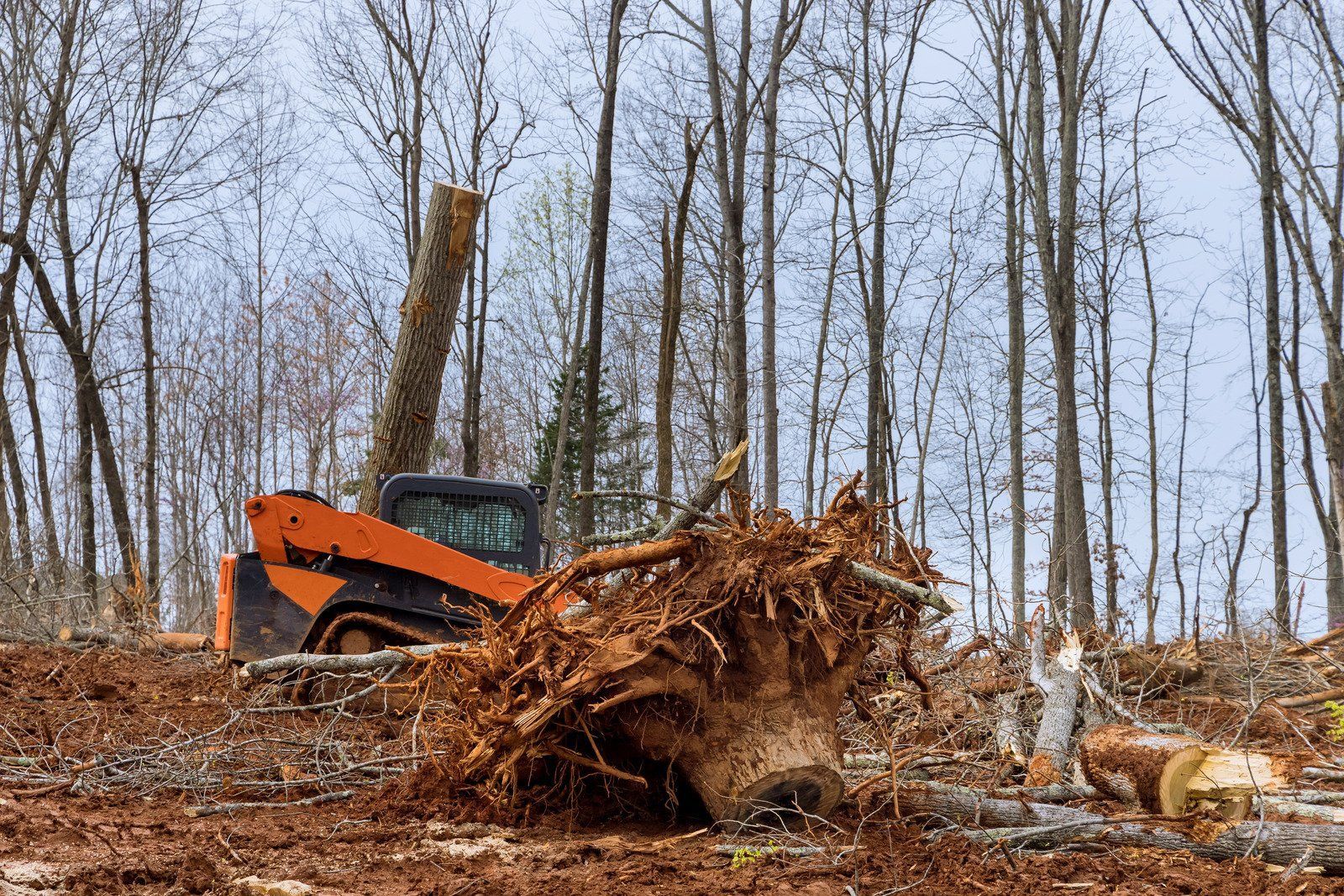
Cutting a tree down is the visible part. What happens to the stump underneath matters just as much, and it depends on what that section becomes. Under a future building pad, footing, or driveway, stumps get ground well below grade, often eight to twelve inches, because buried wood decomposes and settles unevenly, dipping a driveway or foundation.
In areas that won't carry structural weight, like a future yard, buffer strip, or land held for later phases, the standard shifts. Forestry mulching grinds stumps and brush a few inches down and turns the material into mulch that stays on site. Mixing up which method belongs where is a common, expensive wooded lot mistake.
Debris handling follows the same logic. Some owners want everything hauled off for a completely clean slate. Others keep the material on site as mulch, which cuts truck traffic and gives you a head start on erosion control in bare areas once clearing wraps. Either works. What matters is deciding up front, since it changes how the crew sequences everything.
Where Slope and Clay Change the Plan
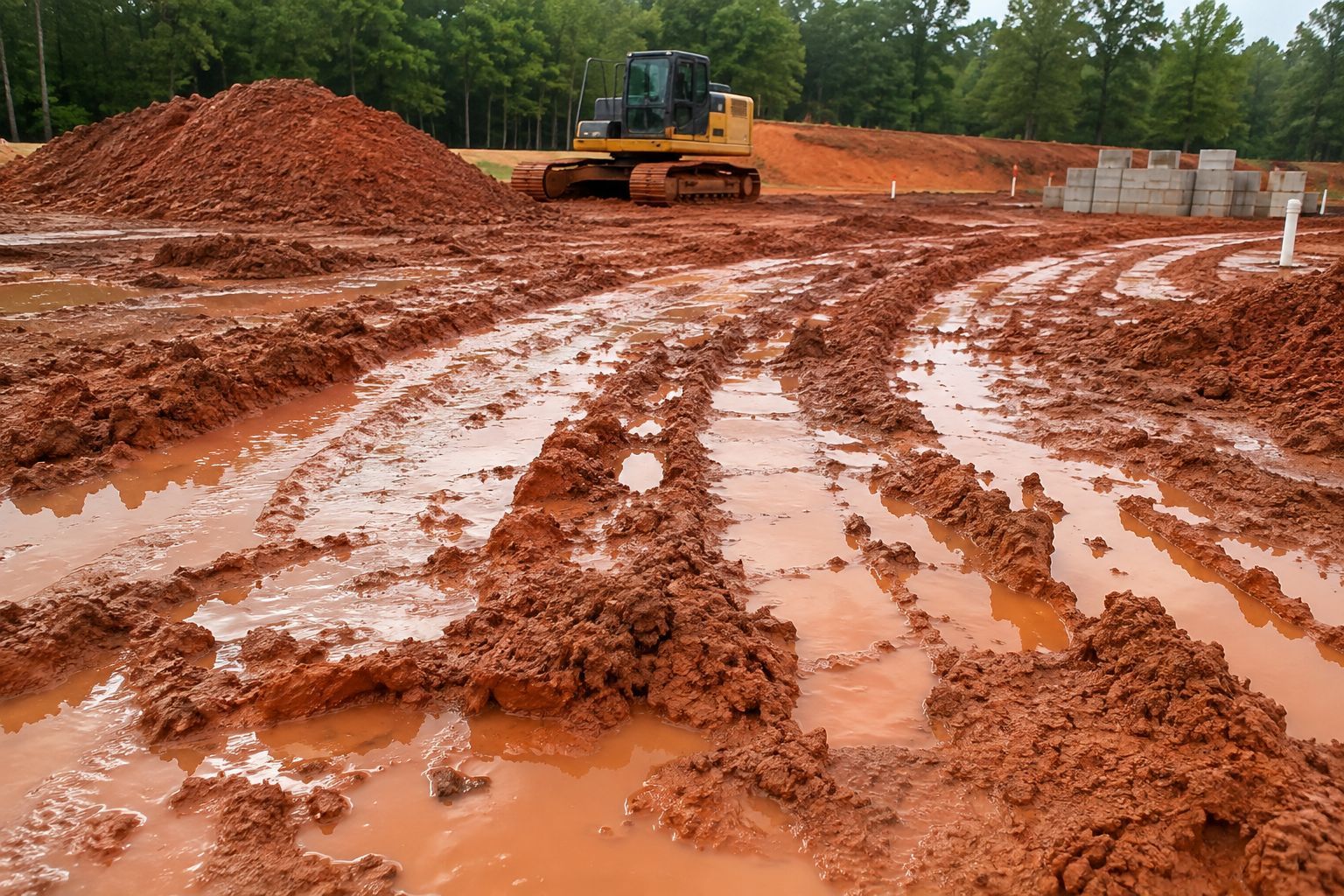
This is the part that separates a lot that handles its first heavy rain from one that turns into a mess the moment the canopy comes off. Standing timber and undergrowth do real work. Roots hold soil in place, and the canopy breaks up rainfall. Strip that away and you've exposed bare, compacted red clay to direct rain on a slope.
An experienced crew sequences clearing to limit how much bare ground sits exposed at once. Instead of stripping the whole lot and hoping the weather cooperates, work moves in sections, with silt fencing or temporary swales going in before a section is fully cleared. On sloped lots, saturated clay starts moving downhill, undermining a pad or driveway edge.
Wooded lots also carry their own microclimates that a bare, open lot doesn't have. Shaded, low-lying pockets under a canopy hold moisture longer than open ground, sometimes for days after the rest of the property has dried out. A crew that's worked North Georgia terrain knows to check those spots by hand, because clay that looks dry can rut underneath.
But the biggest mistake isn't a technique problem. It's a timing problem — clearing the whole lot the week before a wet forecast because the schedule says so.
WARNING: Don't let a crew clear an entire wooded lot down to bare dirt right before a stretch of heavy rain, even if it saves a day on the schedule. Exposed red clay on any kind of slope erodes fast once it loses its root structure and canopy cover, and a single storm hitting freshly cleared ground can wash out grading work that took days to get right, sending sediment onto neighboring property in the process.
Getting From Wooded to Build-Ready
By the time a wooded lot is actually ready to hand off to a builder, it's gone through assessment, selective removal, stump handling matched to what's going on top of it, and grading and erosion control that account for the specific slope and soil on that property. None of those steps are optional if you want the site to perform the way you're expecting once a house, driveway, and septic system are actually sitting on it.
The lots that give buyers the fewest surprises later are the ones where clearing was treated as its own project with its own plan, not just a quick pass to get the trees out of the way before the real construction starts. That means a crew that walks the property first, makes deliberate calls about what stays and what goes, matches stump and debris handling to the end use of each section, and manages the exposed ground carefully until it's stabilized. Get that sequence right and the rest of the build has a foundation, literally and otherwise, that behaves the way it's supposed to for years afterward.
Is it safe to mount a TV over a fireplace?
Yes, with the right precautions. Heat off the firebox, wall structure, and viewing angle all need checking first. A gas or electric unit with managed heat can run for years. Wood-burning fireplaces with no heat plan cause trouble.
How far above the fireplace should the TV be mounted?
A common range is 8 to 12 inches between mantel top and screen bottom, though it shifts with your fireplace and wall height. The hotter the unit, the more clearance you want, keeping the screen above rising heat.
Can the heat from my fireplace really damage a TV?
It can, usually slowly. Most sets are rated up to 100-104 degrees, and unmanaged fireplace walls can climb past that. Over time this shows as dead pixels, a warped bezel, or shutdowns. Managing heat prevents it.
Do I need a special mount for a TV over a fireplace?
Most of the time, yes. A fixed mount aims the screen over your head. A tilting mount angles down toward viewers; full-motion arms pull out and down. The right choice depends on screen size and wall height.
Can I hide the wires if my fireplace is brick or stone?
It's harder than drywall but doable. Masonry rarely has an open cavity, so the path must be planned before mounting. Options range from in-wall routing to low-profile surface channels. Mapping the route first avoids disruptive retrofits.
Should the TV be bigger or smaller than the fireplace?
As a rule, match the firebox width or go slightly smaller, keeping the wall balanced. Oversized panels over narrow hearths are common now, but proportion makes the wall read as one clean focal point, not competing elements.
Frequently Asked Questions
How long does it take to clear a wooded lot before construction can start?
Lot size, tree density, and terrain all matter, but a typical residential lot moves through assessment, clearing, stump work, and initial grading in a few days to a week. Steeper or hazard-heavy lots take longer.
Should I clear the whole lot at once or do it in phases?
Clearing only what the current building phase needs, and leaving the rest wooded, is usually smarter. It limits how much bare ground faces weather at once and preserves options if your plans for the property change.
Can I keep specific trees close to where the house will sit?
Sometimes, with planning. Trees near a future foundation need their root zones evaluated and protected from equipment and grade changes, and a crew has to weigh whether the root spread will eventually conflict with foundation or utilities.
What's the difference between mulching and full stump removal?
Mulching grinds brush and stumps a few inches down and leaves the material on site as organic matter, good for non-structural areas. Full stump removal goes eight to twelve inches deep, what a building pad needs.
Does clearing a wooded lot make drainage problems worse?
It can, temporarily, without erosion control in mind. Removing trees and undergrowth strips the root structure and canopy that slowed rainfall and held soil, which is why sequencing work and installing silt fencing before storms matters.
How do I know if a tree on my lot is a hazard that needs to come down regardless of my building plans?
Look for dead limbs throughout the canopy, trunk decay or cavities, a significant lean, or exposed, damaged roots. A tree showing several of those signs is treated as a hazard and removed early, wherever it stands.
What a Careful Clearing Sequence Leaves Behind
A wooded lot rewards the buyer who treats clearing as its own careful process rather than a rushed first step. The order of the work, from the initial walk through hazard flagging, stump depth, and erosion control, quietly shapes how the finished site behaves once a house, driveway, and utilities are in place. Georgia Land Pros has spent 5 years reading North Georgia terrain in and around Gainesville, GA, learning what red clay and shifting slope demand before any tree comes down.
Get the sequence right and the payoff shows up quietly, in the years when problems never surface. A driveway that holds its grade, a yard that fills back in, mature trees that survived construction because their roots were protected, drainage that sends water where it should go. Those are the marks of a lot cleared with judgment. The land itself confirms the plan worked long after the crew has packed up and the first walls have gone up.